ALO-SHA-20260905-AC-001

Alocasia ‘Shattered Glass’

0
QR code

Repotting Planner

Cadence: Not scheduled · Not scheduled

Primary: Not assigned · Alternate: Not assigned

No eligible windows assigned. Configure the definition first.

Care Cadences

Live definition defaults with your instance care settings.

3 of 6 care decisions resolved

WateringEvery 7 daysFrom definitionNext due: Nov 27, 2026
FertilizingNot scheduled
RepottingNot scheduled
Pest inspectionEvery 14 daysFrom definitionNext due: Nov 30, 2026
General inspectionEvery 30 daysFrom definitionNext due: Not established
PruningNot scheduled

Acquisition & provenance

The canonical record of how this specimen entered the collection.

Acquired: Sep 4, 2026

Acquisition label: —

Seller: TheNurseryProjectUSA

Channel: TheNurseryProjectUSA

Sources: Source unknown

Price: USD 13

Linked acquisition: cmtnjb9jw0006ev5223irxwbq

Identity

Alocasia ‘Shattered Glass’

Confidence: uncertain

Author citation: —

Status: ACTIVE

Type: Mother / established plant

Location: LOC-RM-06 · Work Office

Acquired: Sep 3, 2026

Propagated: —

Stock: —

View lineage graph

Aliases

elephant ear · common name · probable

Current substrate

Received Substrate

Substrate library

Received Substrate

Substrate history (1)

Received Substrate

Sep 4, 2026 · Initial substrate recorded

Received Substrate

Specimen photos

Choose one cover photo for this specimen card. Admins can also mark one specimen photo as the type photo for the plant definition.
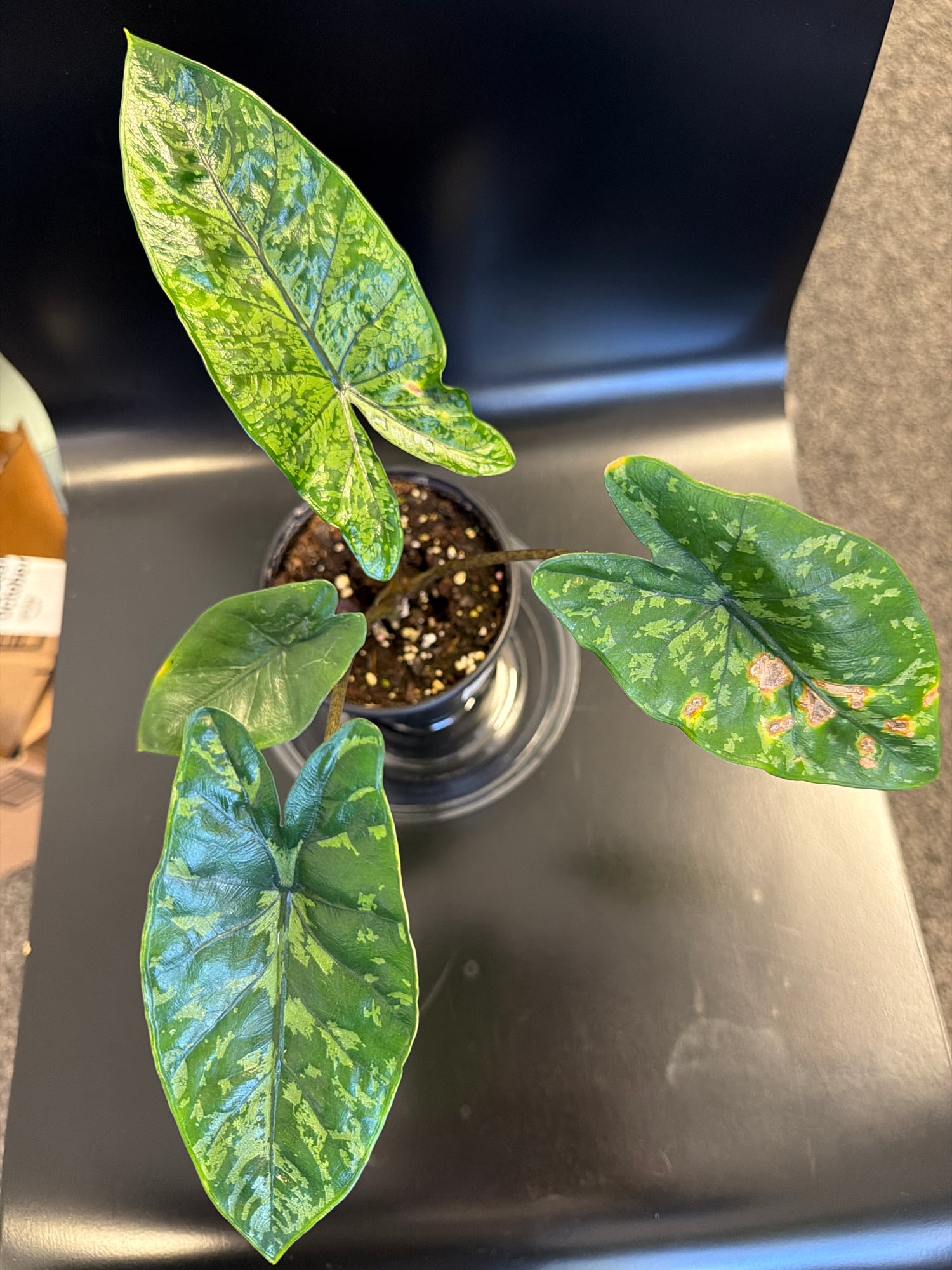
Potted plant with patterned leaves

Potted plant with patterned leaves

Not cover · Not type

Plant Health Timeline

A deterministic record of care, observations, blooms, documentation, and lineage activity for this specimen.

20 events

Timeline status

Recently active

Health trend

Healthy

Age in collection

78 days

Last observation

Today

Last watering

Today

Last photo

31 days

Last bloom

No data

Bloom cycles

0

Propagations produced

0

Unresolved issues

0

Watch items

0

Longest quiet period

13 days

Sep 3, 2026Nov 20, 2026
Life Story listOpen

Quarantine

Quarantine records are manual workflow records; moving a plant does not start or release quarantine by itself.

No active quarantine record.

Care

Last watering, open conditions, and recent care history.

Last watered

Nov 20, 2026

Next estimate

Nov 27, 2026

Open conditions

0

Recent care history

watered · Nov 20, 2026

Recorded via bulk care batch.

pest check · Nov 16, 2026

watered · Nov 13, 2026

watered · Nov 4, 2026

pest check · Nov 2, 2026

watered · Oct 27, 2026

watered · Oct 20, 2026

Recorded via bulk care batch.

pest check · Oct 19, 2026

Husbandry

Inherited from this plant definition.

Keep evenly moistBright indirect lightToxic if ingested

Provide warm, humid conditions with a chunky, well-draining aroid mix and avoid letting the root zone dry out completely.

Location compatibility

Review recommended

Advisory

Some recorded conditions are worth reviewing. You can still use this location.

Temperaturematch

The recorded location range sits within the plant’s preferred range.

Plant: 15–30 °C · Location: 21–24.5 °C

Nighttime temperatureunknown

There is not enough structured nighttime temperature data to compare.

Plant: Unknown · Location: 18.5–22 °C

Humidityconflict

Recorded humidity does not overlap the plant’s preferred range.

Plant: 60-80% · Location: 39-55%

Light measurementunknown

There is not enough structured light measurement data to compare.

Plant: Unknown · Location: Unknown

Photoperiodunknown

There is not enough structured photoperiod data to compare.

Plant: Unknown · Location: 12-12 h

Light intensitymatch

Recorded light intensity matches the structured preference.

Plant: bright · Location: bright

Light exposurecaution

Recorded exposure is reasonably compatible, though seasonal changes may matter.

Plant: indirect · Location: mixed

Airflowmatch

No clear airflow conflict is recorded.

Plant: Avoid drafts · Location: moderate

Stabilitymatch

No clear stability conflict is recorded.

Plant: stable · Location: stable

Missing comparison data: Nighttime temperature, Light measurement, Photoperiod.

Full husbandry guideOpen

Full husbandry guide

Inherited from plant definition

Quick summary

Water
Keep evenly moist
Light
Bright indirect light
Toxicity
Toxic if ingested
Care notes
Provide warm, humid conditions with a chunky, well-draining aroid mix and avoid letting the root zone dry out completely.

Watering

Cadence
Water when the top layer of the mix begins to dry, keeping moisture consistent without waterlogging.
Moisture level
Evenly moist
Drought tolerance
Low
Wet/dry cycle notes
Allow the upper portion of the substrate to dry slightly between waterings; reduce frequency if growth slows or temperatures drop.
Seasonal adjustments
Water less often in cooler or lower-light periods and more actively during warm, bright growth.

Light

Intensity
Bright
Duration
10 to 14 hours

Temperature and hardiness

Cold tolerance
Keep above 15 °C
Heat tolerance
Tolerates warm indoor conditions if humidity and watering are adequate.
Frost sensitivity
Highly frost sensitive
Overwinter instructions
Keep warm, reduce watering, and avoid cold windowsills or draft exposure in winter.

Humidity

Range
60 to 80 percent
Dry air tolerance
Low
Misting notes
Misting is not a substitute for ambient humidity; use a humidifier or grouped plants if indoor air is dry.

Soil and medium

Preferred medium
An airy aroid mix with moisture-retentive components and strong drainage.
Drainage needs
Fast draining
Growth substrate habit
Chunky, airy, moisture-retentive without becoming soggy
Substrate recipe notes
A mix similar to the collection’s Aroid Mix or Alocasia Mix is appropriate: bark, perlite or pumice, and a moisture-holding component such as coir.

Fertilization

Type
Balanced liquid fertilizer
Strength
Half strength
Frequency
Every 2 to 4 weeks during active growth
Seasonal schedule
Feed during spring and summer; reduce or pause feeding in low-light winter conditions.

Repotting

IntervalLocal adjustmentEdit care cadence
Not scheduled
Pot type
Pot with ample drainage holes
Root sensitivity
Sensitive
Dormancy consideration
Repot during active growth when recovery is faster.

Propagation

Preferred methods
Division or separation of offsets/corms
Difficulty
Moderate
Expected success
Moderate to high with healthy, established material
Optimal timing
Late spring to summer

Pests and disease

Common pests
Spider mites, mealybugs, thrips, and scale
Common diseases
Root rot and bacterial or fungal leaf spotting if kept too wet or stagnant
Treatment notes
Remove damaged tissue, improve airflow, and avoid overwatering; inspect undersides of leaves regularly for pests.
Susceptibility level
Moderate
Preventative practices
Provide bright indirect light, steady warmth, good airflow, and a well-drained substrate; avoid standing water in the pot saucer.

Toxicity

Pets
Toxic if ingested
Humans
Toxic if ingested
Sap irritant
true

Growth habit

Growth habit
Upright clumping aroid with large ornamental leaves

Sport / mutation

Status: NONE

No sport observations yet.

Parents

No parent propagation recorded.

Children

No child propagations yet.

Add note

Sep 4, 2026, 6:37 p.m. EDT
sold as a rehab

Reminders

Send yourself plant check-in emails tied to this specimen.

All reminders

Sign in to schedule reminders.

No reminders for this plant yet.

Bloom tracker

Open a bloom when it starts, mark peak later, then close it when finished. Photos can be added to the bloom event at any stage.

No bloom events recorded yet.