MICTHA-20260806-AC-001

Microsorum thailandicum

0
QR code

Repotting Planner

Cadence: Every 18 months · From definition

Primary: Not assigned · Alternate: Not assigned

No eligible windows assigned. Configure the definition first.

Care Cadences

Live definition defaults with your instance care settings.

5 of 6 care decisions resolved

WateringEvery 4 daysFrom definitionNext due: Nov 21, 2026
FertilizingNot scheduled
RepottingEvery 18 monthsFrom definitionNext due: Not established
Pest inspectionEvery monthFrom definitionNext due: Dec 8, 2026
General inspectionEvery monthFrom definitionNext due: Not established
PruningNot applicableFrom definition

Acquisition & provenance

The canonical record of how this specimen entered the collection.

Acquired: Aug 5, 2026

Acquisition label: —

Seller: TheNurseryProjectUSA

Channel: TheNurseryProjectUSA

Sources: Source unknown

Price: USD 16

Linked acquisition: cmt0h1vry003gdubnbc8oiwb9

Identity

Microsorum thailandicum

Confidence: uncertain

Author citation: Boonkerd & Noot.

Status: ACTIVE

Type: Mother / established plant

Location: LOC-RM-03 · Living room

Acquired: Aug 5, 2026

Propagated: —

Stock: —

View lineage graph

Aliases

Blue oil fern · common name · probable

Oil fern · common name · uncertain

Current substrate

Received Substrate

Substrate library

Received Substrate

Substrate as received; composition not yet recorded.

Substrate history (1)

Received Substrate

Aug 5, 2026 · Initial substrate recorded from bulk acquisition

Received Substrate

Substrate as received; composition not yet recorded.

Specimen photos

Choose one cover photo for this specimen card. Admins can also mark one specimen photo as the type photo for the plant definition.
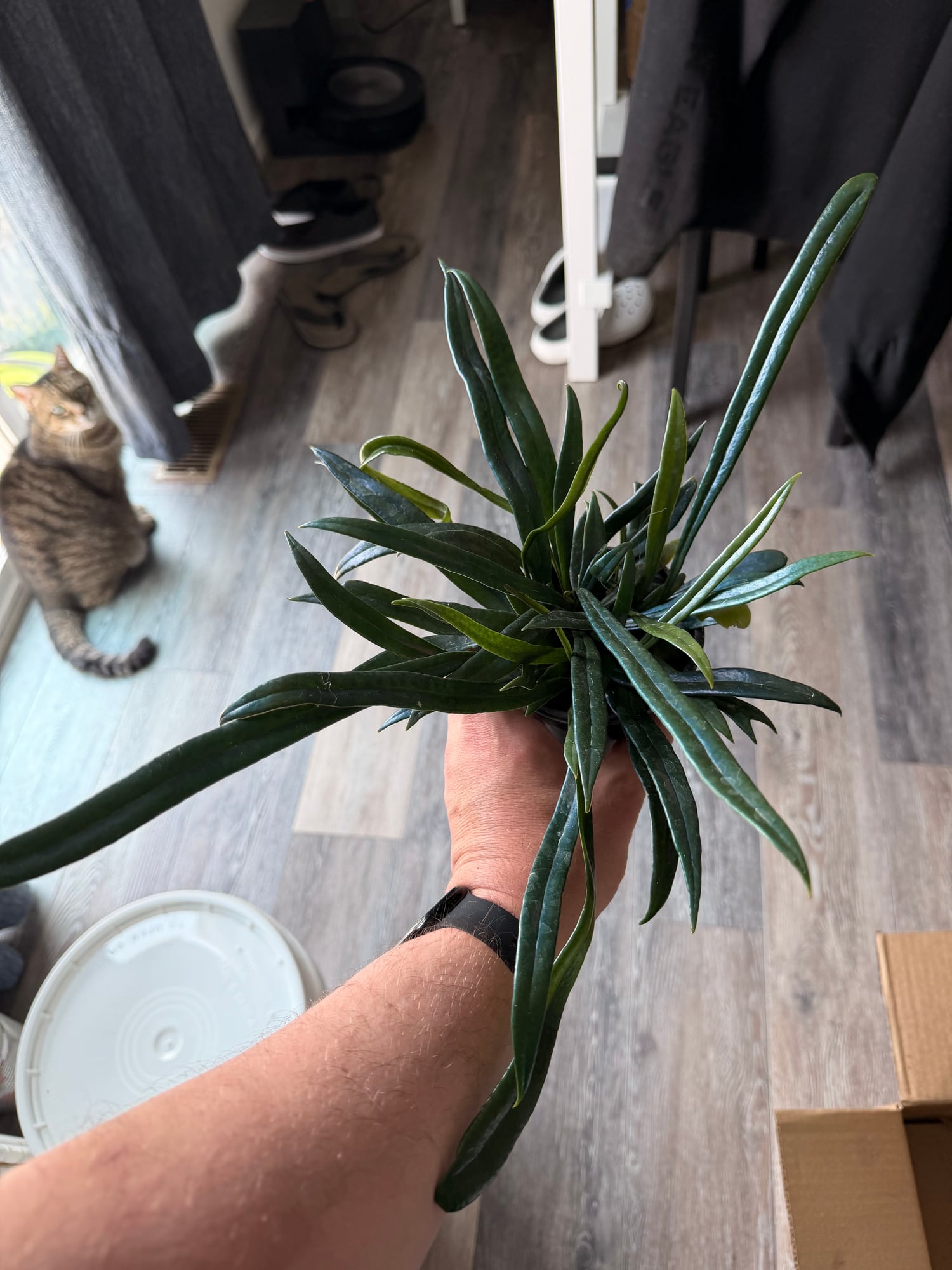
Handheld plant cutting with long leaves

Handheld plant cutting with long leaves

Not cover · Type photo

Plant Health Timeline

A deterministic record of care, observations, blooms, documentation, and lineage activity for this specimen.

23 events

Timeline status

Recently active

Health trend

Healthy

Age in collection

107 days

Last observation

3 days

Last watering

3 days

Last photo

85 days

Last bloom

No data

Bloom cycles

0

Propagations produced

0

Unresolved issues

0

Watch items

0

Longest quiet period

16 days

Aug 5, 2026Nov 17, 2026
Life Story listOpen

Quarantine

Quarantine records are manual workflow records; moving a plant does not start or release quarantine by itself.

No active quarantine record.

Care

Last watering, open conditions, and recent care history.

Last watered

Nov 17, 2026

Next estimate

Nov 21, 2026

Open conditions

0

Recent care history

watered · Nov 17, 2026

watered · Nov 12, 2026

pest check · Nov 8, 2026

watered · Nov 8, 2026

watered · Nov 3, 2026

watered · Oct 30, 2026

watered · Oct 26, 2026

watered · Oct 22, 2026

Husbandry

Inherited from this plant definition.

Evenly moist, never soggyBright indirect lightLikely low-risk, but not well documented

Warm, humid, airy fern care; keep roots lightly moist, give filtered light, and avoid heavy fertilizer.

Location compatibility

Not enough information

Advisory

There is not enough structured data for a reliable comparison.

Temperatureunknown

There is not enough structured temperature data to compare.

Plant: 10–30 °C · Location: Unknown

Nighttime temperatureunknown

There is not enough structured nighttime temperature data to compare.

Plant: 16–22 °C · Location: Unknown

Humidityunknown

There is not enough structured humidity data to compare.

Plant: 50-80% · Location: Unknown

Light measurementunknown

There is not enough structured light measurement data to compare.

Plant: Unknown · Location: Unknown

Photoperiodunknown

There is not enough structured photoperiod data to compare.

Plant: 10-14 h · Location: Unknown

Light intensityunknown

Qualitative light data is incomplete.

Plant: BRIGHT · Location: Unknown

Light exposureunknown

Direct/indirect exposure data is incomplete.

Plant: INDIRECT · Location: Unknown

Airflowunknown

The location airflow is not configured.

Plant: Avoid drafts · Location: Unknown

Stabilityunknown

Environmental stability data is incomplete.

Plant: STABLE · Location: Unknown

Missing comparison data: Temperature, Nighttime temperature, Humidity, Light measurement, Photoperiod, Light intensity, Light exposure, Airflow, Stability.

Full husbandry guideOpen

Full husbandry guide

Inherited from plant definition

Quick summary

Water
Evenly moist, never soggy
Light
Bright indirect light
Toxicity
Likely low-risk, but not well documented
Care notes
Warm, humid, airy fern care; keep roots lightly moist, give filtered light, and avoid heavy fertilizer.

Watering

Cadence
Water when the top layer just begins to dry, usually once or twice weekly indoors.
Moisture level
Lightly and consistently moist
Drought tolerance
Low to moderate
Wet/dry cycle notes
Do not let the root zone dry out completely; avoid standing water.
Seasonal adjustments
Water less in cool, low-light months; increase slightly in active growth and warm weather.

Light

Intensity
Bright indirect light or light shade
Duration
10-14 hours of bright ambient light

Temperature and hardiness

USDA zone
10-12 outdoors; commonly grown indoors elsewhere
Cold tolerance
Avoid prolonged exposure below about 10 °C / 50 °F
Heat tolerance
Handles warmth if humidity stays high and air moves
Frost sensitivity
Frost tender
Overwinter instructions
Keep indoors above cool-room levels, away from drafts and heaters.

Humidity

Range
50–80% relative humidity
Dry air tolerance
Poor
Misting notes
Misting is only a temporary boost; humidifier or pebble tray is more effective.

Soil and medium

Preferred medium
Loose epiphytic fern mix with fine bark, sphagnum, coco chips, and perlite
pH preference
Slightly acidic to near neutral, about 5.5-6.5
Drainage needs
Fast draining but moisture-retentive
Growth substrate habit
Epiphytic or epipetric rhizome fern
Substrate recipe notes
Use an airy mix that stays damp, not compacted; mount culture can work if humidity is high.

Fertilization

Type
NO_FERTILIZER_RECOMMENDED
Strength
Very light or none
Frequency
Monthly at most, only if growth is active
Seasonal schedule
Skip feeding in winter or low-light periods; resume only with new growth.
Micronutrient notes
If fed, use a dilute balanced fertilizer with occasional micronutrients; flush salts periodically.

Repotting

IntervalLocal adjustmentEdit care cadence
Every 18 months
Preserved legacy guidance: Every 1–2 years or when the mix breaks down
Inherited: Every 1–2 years or when the mix breaks down
Pot type
Shallow pot or basket with excellent drainage
Root sensitivity
Moderately sensitive; avoid rough root disturbance
Dormancy consideration
Repot in active growth, not during stressed winter slowdown
Division guidance
Divide only large, vigorous clumps with several growing points.

Propagation

Preferred methods
Division, rhizome sections with fronds, and tissue culture
Difficulty
Moderate
Expected success
Moderate to good with stable humidity
Optimal timing
Warm season or active growth
Rooting hormone notes
Usually unnecessary; use only lightly on cut rhizomes if desired.
Tissue culture notes
Common in commercial fern production; useful for mass cloning but requires sterile technique.

Pests and disease

Common pests
Scale, mealybugs, spider mites, thrips
Common diseases
Rhizome rot, leaf spot, bacterial soft rot
Treatment notes
Improve airflow, remove badly damaged tissue, and treat pests early with gentle systemic or contact controls as appropriate.
Susceptibility level
Moderate
Preventative practices
Use airy media, avoid overwatering, keep foliage clean, and quarantine new plants.

Toxicity

Pets
No widely established toxicity; keep away from pets if ingestion risk is a concern.
Humans
No widely established toxicity; handle as an ornamental plant.
Sap irritant
Unclear; mild irritation is possible with sensitive skin.
Edible?
Not considered edible.

Dormancy and blooms

Dormancy behavior
Evergreen or near-evergreen indoors; growth slows in cool, dim conditions.
Typical bloom season
Does not bloom; fern reproduces by spores.
Bloom duration
N/A
Fragrance
N/A
Rebloom tendency
N/A
Bloom triggers
N/A
Pollinator notes
N/A

Growth habit

Growth habit
Rhizomatous evergreen fern with arching fronds and iridescent blue sheen

Conservation and collection status

Rarity
Uncommon in general houseplant trade
Conservation status
Not clearly documented here; check regional assessments and source data before collecting wild plants.
Reference links
https://powo.science.kew.org/taxon/urn%3Alsid%3Aipni.org%3Anames%3A20002929-1; https://www.gbif.org/species/4024267; https://www.inaturalist.org/taxa/1389350-Microsorum-thailandicum
Protected species notes
Wild collection may be regulated locally; verify legality and provenance.
Collection restrictions
Prefer nursery-propagated stock; avoid wild-collected material unless permitted and documented.
Import/export concerns
Check phytosanitary and CITES-like local rules where applicable; spores, live plants, and mossy mounts may face inspection.
Invasiveness
Low likelihood outdoors in frost-free humid climates, but verify locally.
Native range notes
Native to Thailand; likely humid tropical forest habitats.

Sport / mutation

Status: NONE

No sport observations yet.

Parents

No parent propagation recorded.

Children

No child propagations yet.

Add note

Reminders

Send yourself plant check-in emails tied to this specimen.

All reminders

Sign in to schedule reminders.

No reminders for this plant yet.

Bloom tracker

Open a bloom when it starts, mark peak later, then close it when finished. Photos can be added to the bloom event at any stage.

No bloom events recorded yet.