Received Substrate
Aug 8, 2026 · Initial substrate recorded
Received Substrate

Botanical Accession

Cadence: Every 24 months · From definition
Primary: Not assigned · Alternate: Not assigned
No eligible windows assigned. Configure the definition first.
Live definition defaults with your instance care settings.
4 of 6 care decisions resolved
The canonical record of how this specimen entered the collection.
Acquired: Aug 8, 2026
Acquisition label: —
Seller: TheNurseryProjectUSA
Channel: TheNurseryProjectUSA
Sources: Source unknown
Price: USD 16.72
Linked acquisition: cmsyzo60g00w5lerk8scoavia
Zamioculcas zamiifolia ‘Raven’
Confidence: uncertain
Author citation: (G.Lodd.) Engl.
Status: ACTIVE
Type: Mother / established plant
Location: LOC-RM-06 · Work Office
Acquired: Aug 8, 2026
Propagated: —
Stock: —
View lineage graphAliases
Aroid palm · common name · probable
Black Raven · trade name · probable
Raven ZZ · trade name · probable
ZZ plant · common name · confirmed
Zamioculcas zamiifolia ‘Dowon’ · synonym · probable
Zanzibar gem · common name · confirmed
Received Substrate
Received Substrate
Received Substrate
Aug 8, 2026 · Initial substrate recorded
Received Substrate
Choose one cover photo for this specimen card. Admins can also mark one specimen photo as the type photo for the plant definition.
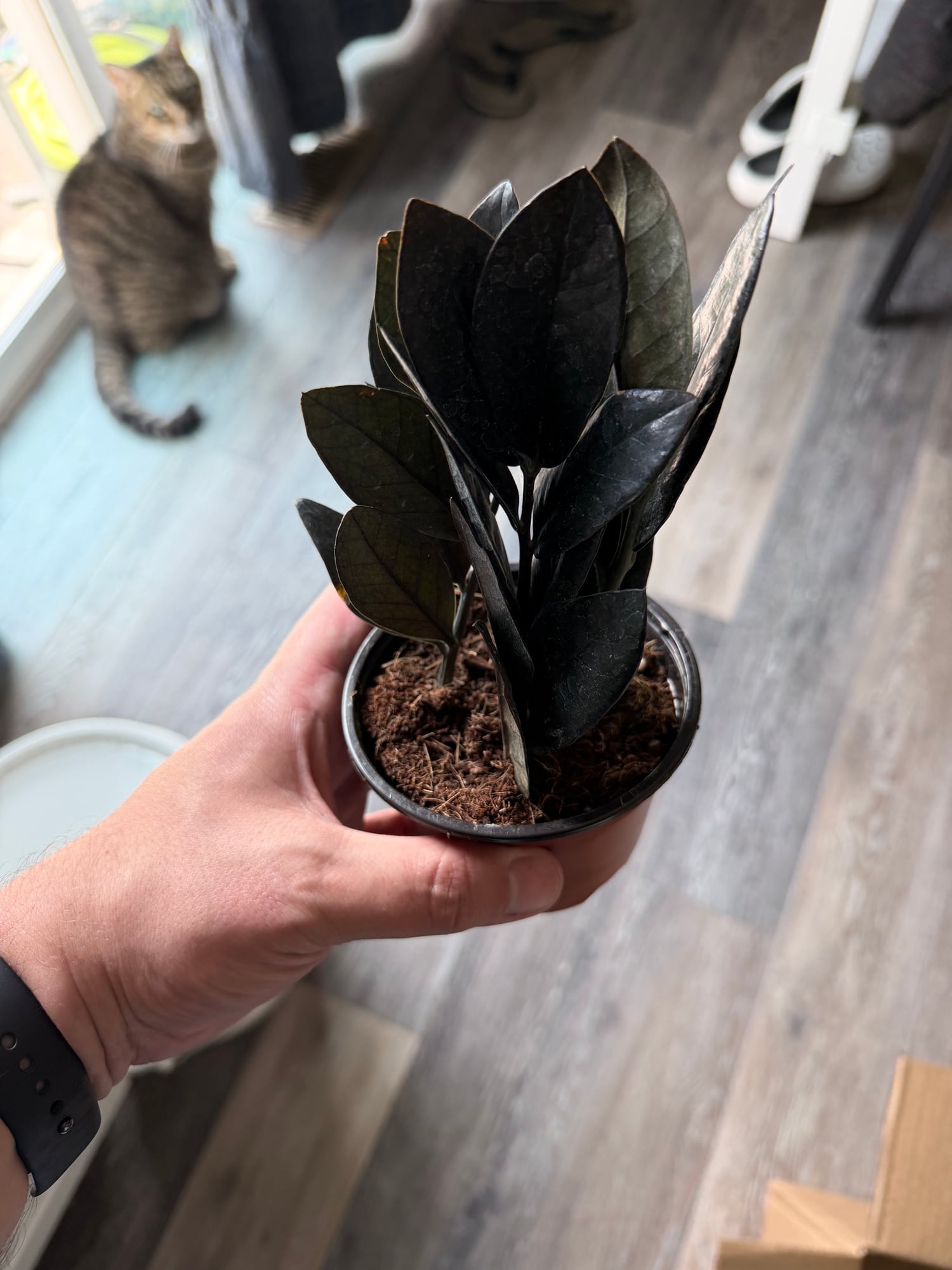
Small potted plant indoors
Not cover · Not type
A deterministic record of care, observations, blooms, documentation, and lineage activity for this specimen.
Timeline status
Recently active
Health trend
Healthy
Age in collection
104 days
Last observation
Today
Last watering
Today
Last photo
94 days
Last bloom
No data
Bloom cycles
0
Propagations produced
0
Unresolved issues
0
Watch items
0
Longest quiet period
27 days
Quarantine records are manual workflow records; moving a plant does not start or release quarantine by itself.
No active quarantine record.
Last watering, open conditions, and recent care history.
Last watered
Nov 20, 2026
Next estimate
Dec 11, 2026
Open conditions
0
Recent care history
watered · Nov 20, 2026
Recorded via bulk care batch.
watered · Nov 13, 2026
pest check · Nov 13, 2026
watered · Oct 16, 2026
pest check · Oct 12, 2026
watered · Sep 15, 2026
Recorded via bulk care batch.
pest check · Sep 11, 2026
watered · Sep 6, 2026
Inherited from this plant definition.
Low-maintenance houseplant with thick, water-storing rhizomes; allow the potting mix to dry substantially between waterings, provide bright to moderate indirect light, and use a very free-draining mix.
Location compatibility
Not enough information
There is not enough structured data for a reliable comparison.
There is not enough structured temperature data to compare.
Plant: Unknown · Location: 21–24.5 °C
There is not enough structured nighttime temperature data to compare.
Plant: Unknown · Location: 18.5–22 °C
There is not enough structured humidity data to compare.
Plant: Unknown · Location: 39-55%
There is not enough structured light measurement data to compare.
Plant: Unknown · Location: Unknown
There is not enough structured photoperiod data to compare.
Plant: Unknown · Location: 12-12 h
Qualitative light data is incomplete.
Plant: Unknown · Location: BRIGHT
Direct/indirect exposure data is incomplete.
Plant: Unknown · Location: MIXED
No structured airflow requirement is recorded.
Plant: Unknown · Location: MODERATE
Environmental stability data is incomplete.
Plant: Unknown · Location: STABLE
Missing comparison data: Temperature, Nighttime temperature, Humidity, Light measurement, Photoperiod, Light intensity, Light exposure, Airflow, Stability.
Inherited from plant definition
Status: NONE
No sport observations yet.
No parent propagation recorded.
No child propagations yet.
Send yourself plant check-in emails tied to this specimen.
Sign in to schedule reminders.
No reminders for this plant yet.
Open a bloom when it starts, mark peak later, then close it when finished. Photos can be added to the bloom event at any stage.
No bloom events recorded yet.