
DAVFEJ-20260426-AC-001
Davallia fejeensis

Acquisition & provenance
The canonical record of how this specimen entered the collection.
Acquired: Apr 25, 2026
Acquisition label: —
Seller: Unknown
Channel: Not specified
Sources: Costa Farms
Price: $12
Linked acquisition: No canonical record yet
Identity
Davallia fejeensis
Confidence: confirmed
Author citation: Hook.
Status: ACTIVE
Type: MOTHER
Location: LOC-RM-02 · Kitchen
Propagated: —
Stock: —
View lineage graphAliases
Davallia solida var. fejeensis · synonym · confirmed
Hare's-foot fern · common name · confirmed
Rabbit's-foot fern · common name · confirmed
Current substrate
Unknown substrate
Substrate history (0)
No substrate history has been recorded.
Specimen photos
Choose one cover photo for this specimen card. Admins can also mark one specimen photo as the type photo for the plant definition.
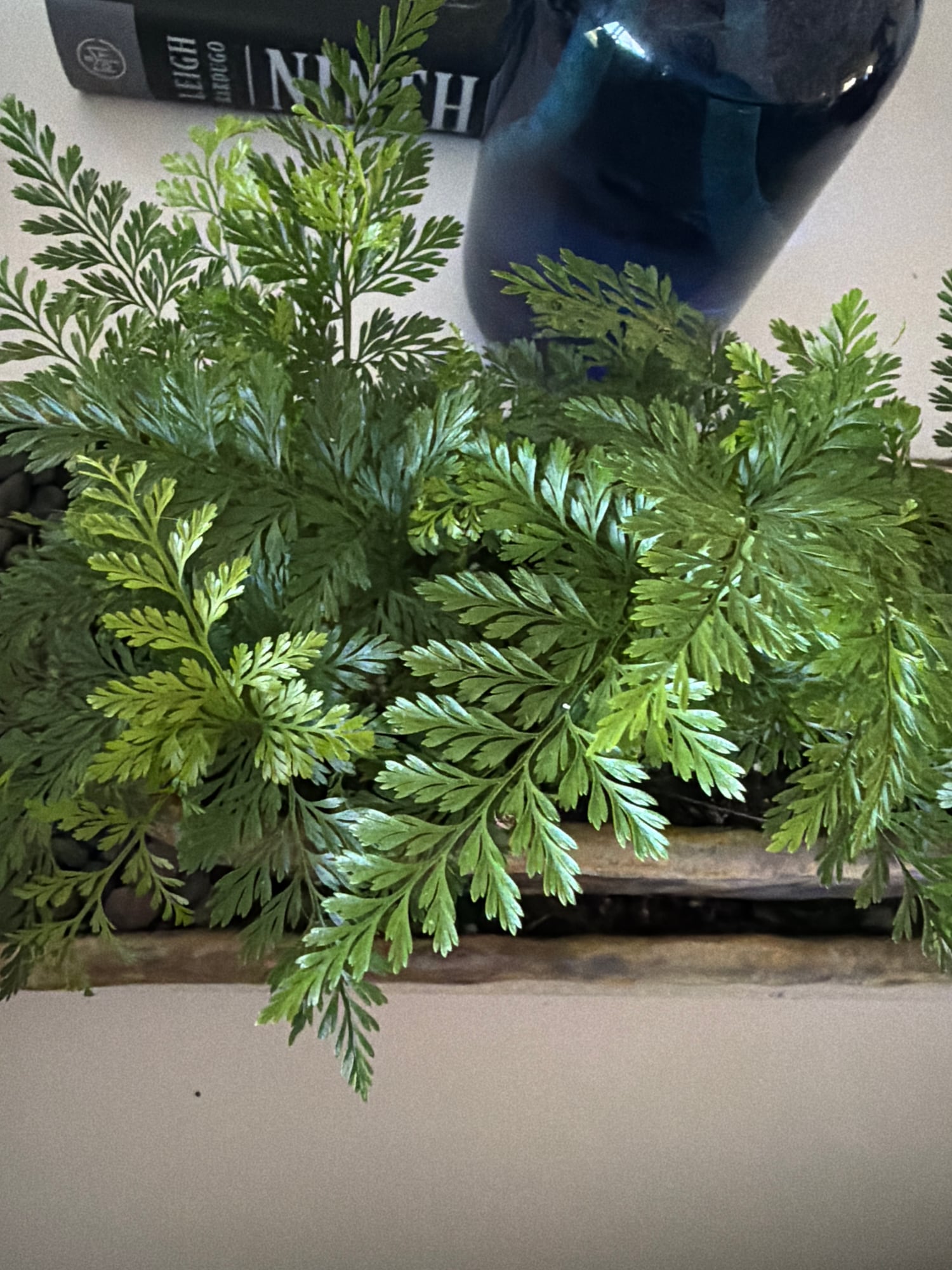
Planted in handmade ceramic
Cover photo · Type photo
Plant Health Timeline
A deterministic record of care, observations, blooms, documentation, and lineage activity for this specimen.
Timeline status
Recently active
Health trend
Recovering
Age in collection
110 days
Last observation
10 days
Last watering
10 days
Last photo
86 days
Last bloom
No data
Bloom cycles
0
Propagations produced
0
Unresolved issues
0
Watch items
0
Longest quiet period
24 days
Life Story listOpenHide
April 2026
May 2026
June 2026
July 2026
August 2026
Quarantine
Quarantine records are manual workflow records; moving a plant does not start or release quarantine by itself.
No active quarantine record.
Care
Last watering, open conditions, and recent care history.
Last watered
Aug 4, 2026
Next estimate
Aug 9, 2026
Open conditions
0
Conditions
pests · moderate · resolved
Observed Jul 3, 2026
Fungus gnats again
pests · low · resolved
Observed May 23, 2026
Gnats occasionally observed. Reducing watering to allow surface to fully dry.
Recent care history
watered · Aug 4, 2026
pest check · Jul 30, 2026
Resolved pests condition.
watered · Jul 30, 2026
pest check · Jul 24, 2026
Condition still needs attention.
watered · Jul 23, 2026
Mosquito Dunk tea drench
pest check · Jul 20, 2026
Condition still needs attention.
pest check · Jul 16, 2026
Condition still needs attention.
watered · Jul 15, 2026
Husbandry
Inherited from this plant definition.
Warm, humid hanging-basket fern with airy, fast-draining mix; keep roots lightly moist, avoid direct sun and stagnant wetness.
Location compatibility
Not enough information
There is not enough structured data for a reliable comparison.
There is not enough structured temperature data to compare.
Plant: Unknown · Location: Unknown
There is not enough structured nighttime temperature data to compare.
Plant: Unknown · Location: Unknown
There is not enough structured humidity data to compare.
Plant: Unknown · Location: Unknown
There is not enough structured light measurement data to compare.
Plant: Unknown · Location: Unknown
There is not enough structured photoperiod data to compare.
Plant: Unknown · Location: Unknown
Qualitative light data is incomplete.
Plant: Unknown · Location: Unknown
Direct/indirect exposure data is incomplete.
Plant: Unknown · Location: Unknown
No structured airflow requirement is recorded.
Plant: Unknown · Location: Unknown
Environmental stability data is incomplete.
Plant: Unknown · Location: Unknown
Missing comparison data: Temperature, Nighttime temperature, Humidity, Light measurement, Photoperiod, Light intensity, Light exposure, Airflow, Stability.
Full husbandry guideOpenHide
Full husbandry guide
Inherited from plant definition
Quick summary
- Water
- Keep evenly moist
- Light
- Bright indirect light
- Toxicity
- Generally regarded safe
- Care notes
- Warm, humid hanging-basket fern with airy, fast-draining mix; keep roots lightly moist, avoid direct sun and stagnant wetness.
Watering
- Cadence
- Water when the top 1–2 cm of mix begins to dry; often 1–2 times weekly indoors, less in cool weather.
- Moisture level
- Consistently lightly moist; roots should not sit in water.
- Drought tolerance
- Low to moderate; brief drying is tolerated better than waterlogging.
- Wet/dry cycle notes
- Water thoroughly, then drain completely; moisten the root mass evenly, including the creeping rhizomes without leaving them soaked.
- Seasonal adjustments
- Reduce frequency in winter or low light; increase slightly in active growth, warm weather, or drying indoor heat.
Light
- Intensity
- Bright, filtered light; avoid harsh direct sun.
- Duration
- About 10–14 hours of bright ambient light daily.
Temperature and hardiness
- USDA zone
- USDA zones 10–12 outdoors; commonly grown as a houseplant elsewhere.
- Cold tolerance
- Sensitive below about 10°C; brief cool spells may cause decline.
- Heat tolerance
- Handles warm indoor conditions to about 29–32°C if humidity is adequate.
- Frost sensitivity
- Frost tender; protect from any frost.
- Overwinter instructions
- Keep indoors in bright indirect light, away from cold windows and heating vents; maintain steady moisture and humidity.
Humidity
- Range
- Moderate to high humidity, ideally 50–70%+.
- Dry air tolerance
- Poor; dry air often browns fronds and tips.
- Misting notes
- Misting gives only temporary benefit; use a humidifier or pebble tray for steadier humidity.
Soil and medium
- Preferred medium
- Loose fern mix with peat or coco fiber, bark, and perlite or pumice.
- pH preference
- Slightly acidic to neutral, about pH 5.5–6.8.
- Drainage needs
- Excellent drainage with some moisture retention.
- Growth substrate habit
- Epiphytic/terrestrial creeping fern habit; rhizomes prefer to rest near the surface.
- Substrate recipe notes
- Use a chunky, airy basket mix; keep fuzzy rhizomes partly exposed rather than buried deeply.
Fertilization
- Type
- Balanced liquid fertilizer or weak fern feed.
- Strength
- Quarter- to half-strength.
- Frequency
- Every 4–6 weeks during active growth.
- Seasonal schedule
- Feed spring through early autumn; pause or greatly reduce in winter.
- Micronutrient notes
- Occasional micronutrients are helpful; avoid salt buildup from overfeeding.
Repotting
- Interval
- Every 1–2 years, or when crowded and drying too quickly.
- Pot type
- Shallow pot or hanging basket with ample drainage.
- Root sensitivity
- Moderately sensitive; handle roots and rhizomes gently.
- Dormancy consideration
- Repot in active growth when recovery is fastest.
- Division guidance
- Divide only established clumps with several fronds and healthy rhizomes; keep divisions humid until re-rooted.
Propagation
- Preferred methods
- Division, rhizome cuttings with a frond tuft, and spores.
- Difficulty
- Easy to moderate by division; slow from spores.
- Expected success
- High for division; variable for spores and rhizome cuttings.
- Optimal timing
- Spring to early summer.
- Rooting hormone notes
- Usually unnecessary; clean cuts and high humidity matter more.
- Tissue culture notes
- Possible for production but uncommon in home culture.
Pests and disease
- Common pests
- Scale, mealybugs, spider mites, fungus gnats.
- Common diseases
- Root rot, rhizome rot, leaf spot, botrytis in stagnant humidity.
- Treatment notes
- Isolate infested plants; remove badly damaged tissue; improve airflow; treat pests with insecticidal soap or horticultural oil, and rot with reduced watering and fresh mix.
- Susceptibility level
- Moderate; most problems come from low humidity, direct sun, or wet roots.
- Preventative practices
- Provide bright shade, airy mix, good drainage, steady moisture, and regular inspection of rhizomes and leaf undersides.
Toxicity
- Pets
- No widely established severe toxicity; may cause mild stomach upset if chewed.
- Humans
- No widely established severe toxicity; avoid ingestion.
- Sap irritant
- No major sap irritant commonly reported.
- Edible?
- Not considered edible.
Dormancy and blooms
- Dormancy behavior
- No true dormancy; growth slows in cool, low-light periods.
- Typical bloom season
- None; fern does not flower.
- Bloom duration
- N/A
- Fragrance
- N/A
- Rebloom tendency
- N/A
- Bloom triggers
- N/A
- Pollinator notes
- N/A
Growth habit
- Growth habit
- Clumping tropical fern with arching finely divided fronds and creeping fuzzy rhizomes.
Conservation and collection status
- Rarity
- Fairly common in houseplant trade.
- Conservation status
- Not widely assessed in horticultural trade context; wild status varies by source.
- Reference links
- https://powo.science.kew.org/results?q=Davallia%20fejeensis; https://www.gbif.org/species/search?q=Davallia%20fejeensis
- Protected species notes
- Check local collection rules for wild fern material before import or harvest.
- Collection restrictions
- May be subject to phytosanitary and import rules; verify permits for live plants and spores.
- Import/export concerns
- Inspect for pests, soil restrictions, and quarantine requirements; spores and live plants may be regulated.
- Invasiveness
- Low; not generally regarded as invasive indoors, but escape risk depends on climate.
- Native range notes
- Tropical species associated with humid forest habitats; native-range details can vary by taxonomic treatment.
Sport / mutation
Status: NONE
No sport observations yet.
Parents
No parent propagation recorded.
Children
No child propagations yet.
Add note
Jul 5, 2026, 9:31 AM EDT
Treated pebble tray with h2o2 again to help resolve gnats
Reminders
Send yourself plant check-in emails tied to this specimen.
Sign in to schedule reminders.
No reminders for this plant yet.
Bloom tracker
Open a bloom when it starts, mark peak later, then close it when finished. Photos can be added to the bloom event at any stage.
No bloom events recorded yet.