
PEPPRO-20250719-AC-001
Peperomia prostrata

Acquisition & provenance
The canonical record of how this specimen entered the collection.
Acquired: Jul 18, 2025
Acquisition label: —
Seller: Unknown
Channel: Not specified
Sources: Source unknown
Price: —
Linked acquisition: No canonical record yet
Identity
Peperomia prostrata
Confidence: uncertain
Author citation: B.S.Williams ex Mast. & T.Moore
Status: ACTIVE
Type: MOTHER
Location: LOC-RM-03 · Living room
Propagated: —
Stock: —
View lineage graphAliases
String of turtles · common name · confirmed
Current substrate
Unknown substrate
Substrate history (0)
No substrate history has been recorded.
Specimen photos
Choose one cover photo for this specimen card. Admins can also mark one specimen photo as the type photo for the plant definition.
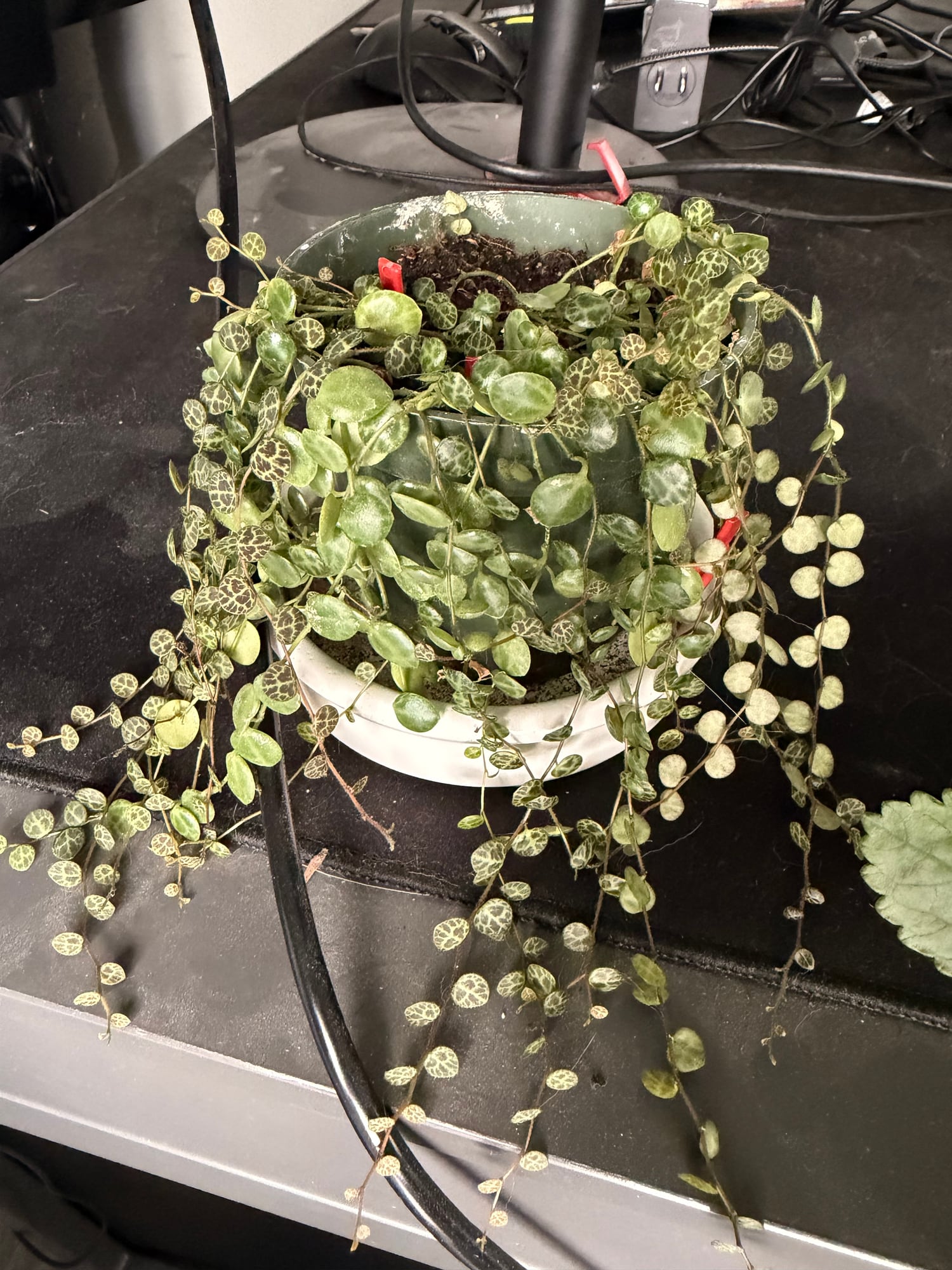
Untitled photo
Not cover · Type photo
Plant Health Timeline
A deterministic record of care, observations, blooms, documentation, and lineage activity for this specimen.
Timeline status
Recently active
Health trend
Healthy
Age in collection
393 days
Last observation
1 day
Last watering
11 days
Last photo
90 days
Last bloom
No data
Bloom cycles
0
Propagations produced
0
Unresolved issues
0
Watch items
0
Longest quiet period
302 days
Life Story listOpenHide
July 2025
May 2026
June 2026
July 2026
August 2026
Quarantine
Quarantine records are manual workflow records; moving a plant does not start or release quarantine by itself.
No active quarantine record.
Care
Last watering, open conditions, and recent care history.
Last watered
Aug 4, 2026
Next estimate
Aug 14, 2026
Open conditions
0
Recent care history
pest check · Aug 14, 2026
watered · Aug 4, 2026
pest check · Jul 24, 2026
watered · Jul 23, 2026
watered · Jul 12, 2026
pest check · Jul 3, 2026
watered · Jul 1, 2026
watered · Jun 21, 2026
Husbandry
Inherited from this plant definition.
Compact trailing succulent peperomia; use airy, fast-draining mix, modest humidity, and avoid overwatering.
Location compatibility
Not enough information
There is not enough structured data for a reliable comparison.
There is not enough structured temperature data to compare.
Plant: Unknown · Location: Unknown
There is not enough structured nighttime temperature data to compare.
Plant: Unknown · Location: Unknown
There is not enough structured humidity data to compare.
Plant: Unknown · Location: Unknown
There is not enough structured light measurement data to compare.
Plant: Unknown · Location: Unknown
There is not enough structured photoperiod data to compare.
Plant: Unknown · Location: Unknown
Qualitative light data is incomplete.
Plant: Unknown · Location: Unknown
Direct/indirect exposure data is incomplete.
Plant: Unknown · Location: Unknown
No structured airflow requirement is recorded.
Plant: Unknown · Location: Unknown
Environmental stability data is incomplete.
Plant: Unknown · Location: Unknown
Missing comparison data: Temperature, Nighttime temperature, Humidity, Light measurement, Photoperiod, Light intensity, Light exposure, Airflow, Stability.
Full husbandry guideOpenHide
Full husbandry guide
Inherited from plant definition
Quick summary
- Water
- Dry before watering
- Light
- Bright indirect light
- Toxicity
- Generally regarded safe
- Care notes
- Compact trailing succulent peperomia; use airy, fast-draining mix, modest humidity, and avoid overwatering.
Watering
- Cadence
- Water when the upper 1–2 cm of mix is dry; usually every 7–14 days indoors.
- Moisture level
- Evenly light-moist, never soggy.
- Drought tolerance
- Moderate; can handle brief dry spells better than wet roots.
- Wet/dry cycle notes
- Soak thoroughly, then drain completely; do not let pots sit in water.
- Seasonal adjustments
- Reduce in winter and in cool, low-light conditions; increase slightly during active spring-summer growth.
Light
- Intensity
- Bright indirect light; tolerates medium light but grows more slowly.
- Duration
- About 10–14 hours of bright light daily.
Temperature and hardiness
- USDA zone
- USDA 10–12 outdoors; commonly grown indoors elsewhere.
- Cold tolerance
- Keep above about 12–15 C; prolonged chill causes stress.
- Heat tolerance
- Handles warm indoor conditions if humidity and watering are managed.
- Frost sensitivity
- Highly frost sensitive; avoid any freezing exposure.
- Overwinter instructions
- Move indoors before cool nights; keep brighter and slightly drier in winter.
Humidity
- Range
- About 40–60% relative humidity preferred.
- Dry air tolerance
- Moderate; survives average home air but may decline in very dry rooms.
- Misting notes
- Misting is usually unnecessary and can encourage spotting or rot.
Soil and medium
- Preferred medium
- Very airy, fast-draining epiphytic/succulent mix.
- pH preference
- Slightly acidic to neutral, about pH 6.0–7.0.
- Drainage needs
- Excellent drainage required.
- Growth substrate habit
- Shallow roots with stems that root at nodes; prefers snug containers.
- Substrate recipe notes
- Use fine orchid bark or coco chips plus perlite and a small amount of peat or coco coir.
Fertilization
- Type
- Balanced liquid houseplant fertilizer, diluted.
- Strength
- Quarter to half strength.
- Frequency
- Every 4–6 weeks during active growth.
- Seasonal schedule
- Feed spring through early autumn; pause or reduce sharply in winter.
- Micronutrient notes
- Occasional complete fertilizer with trace elements is helpful; avoid salt buildup.
Repotting
- Interval
- Every 1–2 years, or when rootbound and mix breaks down.
- Pot type
- Small pot or hanging basket with drainage holes; breathable nursery pot is fine.
- Root sensitivity
- Roots are fine and somewhat delicate; handle gently.
- Dormancy consideration
- Repot best in spring or early summer when growth resumes.
- Division guidance
- Can be divided into sections with rooted nodes; replant shallowly.
Propagation
- Preferred methods
- Stem cuttings, node cuttings, layering at nodes, and division.
- Difficulty
- Easy to moderate.
- Expected success
- High if nodes are kept warm, lightly moist, and in bright indirect light.
- Optimal timing
- Spring through summer.
- Rooting hormone notes
- Optional; not usually necessary but may help thin cuttings.
- Tissue culture notes
- Possible in commercial production; home growers usually use cuttings.
Pests and disease
- Common pests
- Mealybugs, fungus gnats, scale, spider mites.
- Common diseases
- Root rot, stem rot, leaf spotting, and occasional powdery mildew in stagnant air.
- Treatment notes
- Remove pests early, improve airflow, and cut back on watering; treat severe infestations with insecticidal soap or horticultural oil as label-directed.
- Susceptibility level
- Moderate; main risk is overwatering-related rot.
- Preventative practices
- Use sterile mix, allow drying between waterings, provide airflow, and quarantine new plants.
Toxicity
- Pets
- No widely established serious toxicity; keep away from pets as a precaution.
- Humans
- No widely established serious toxicity; avoid ingestion.
- Sap irritant
- Usually not reported as a significant irritant, though sensitive skin may react.
- Edible?
- Not considered edible.
Dormancy and blooms
- Dormancy behavior
- No true dormancy; growth slows in short days and cool conditions.
- Typical bloom season
- Mainly summer to early autumn, though indoor flowering is sporadic.
- Bloom duration
- Short and inconspicuous; flowers are small spikes.
- Fragrance
- Usually none or very faint.
- Rebloom tendency
- Low indoors; foliage is the main ornamental feature.
- Bloom triggers
- Bright light, steady warmth, and adequate nutrition may encourage flowering.
- Pollinator notes
- Tiny flower spikes are not highly ornamental and are often self-limited indoors.
Growth habit
- Growth habit
- Trailing, mat-forming succulent herb with slender stems that root at nodes.
Conservation and collection status
- Rarity
- Uncommon to moderately available in houseplant trade.
- Conservation status
- Not well assessed at horticultural level; wild status varies by source and region.
- Reference links
- POWO: https://powo.science.kew.org/taxon/urn:lsid:ipni.org:names:679508-1; GBIF: https://www.gbif.org/species/10776468; iNaturalist: https://www.inaturalist.org/taxa/431436-Peperomia-prostrata
- Protected species notes
- Check local and source-country rules if wild-collected material is involved.
- Collection restrictions
- Avoid undocumented wild collection; prefer nursery-propagated stock.
- Import/export concerns
- May be subject to phytosanitary inspection and quarantine rules when shipped internationally.
- Invasiveness
- Not generally regarded as invasive in cultivation.
- Native range notes
- Native to tropical South America according to standard references; exact range details may vary by source.
Sport / mutation
Status: NONE
No sport observations yet.
Parents
No parent propagation recorded.
Children
No child propagations yet.
Add note
Aug 10, 2026, 7:06 PM EDT
Plant ID regenerated from PEPPRO-20260517-AC-001 to PEPPRO-20250719-AC-001.
May 20, 2026, 12:33 PM EDT
Originally ordered Fittonia but this arrived instead. Wouldn't really recommend the vendor HousePlantShop.
Reminders
Send yourself plant check-in emails tied to this specimen.
Sign in to schedule reminders.
No reminders for this plant yet.
Bloom tracker
Open a bloom when it starts, mark peak later, then close it when finished. Photos can be added to the bloom event at any stage.
No bloom events recorded yet.