
DRATRI-20260516-AC-001
Dracaena trifasciata

Acquisition & provenance
The canonical record of how this specimen entered the collection.
Acquired: May 14, 2026
Acquisition label: Sansevieria zeylanica
Seller: Unknown
Channel: Not specified
Sources: Source unknown
Price: $36
Linked acquisition: No canonical record yet
Identity
Dracaena trifasciata
Confidence: probable
Author citation: (Prain) Mabb.
Status: ACTIVE
Type: MOTHER
Location: LOC-RM-06 · Work Office
Propagated: —
Stock: p1020928-3gallon
View lineage graphAliases
Sansevieria trifasciata · misapplied name · uncertain
Sansevieria zeylanica · obsolete taxonomy · uncertain
Snake plant · common name · confirmed
Current substrate
Unknown substrate
Substrate history (0)
No substrate history has been recorded.
Specimen photos
Choose one cover photo for this specimen card. Admins can also mark one specimen photo as the type photo for the plant definition.
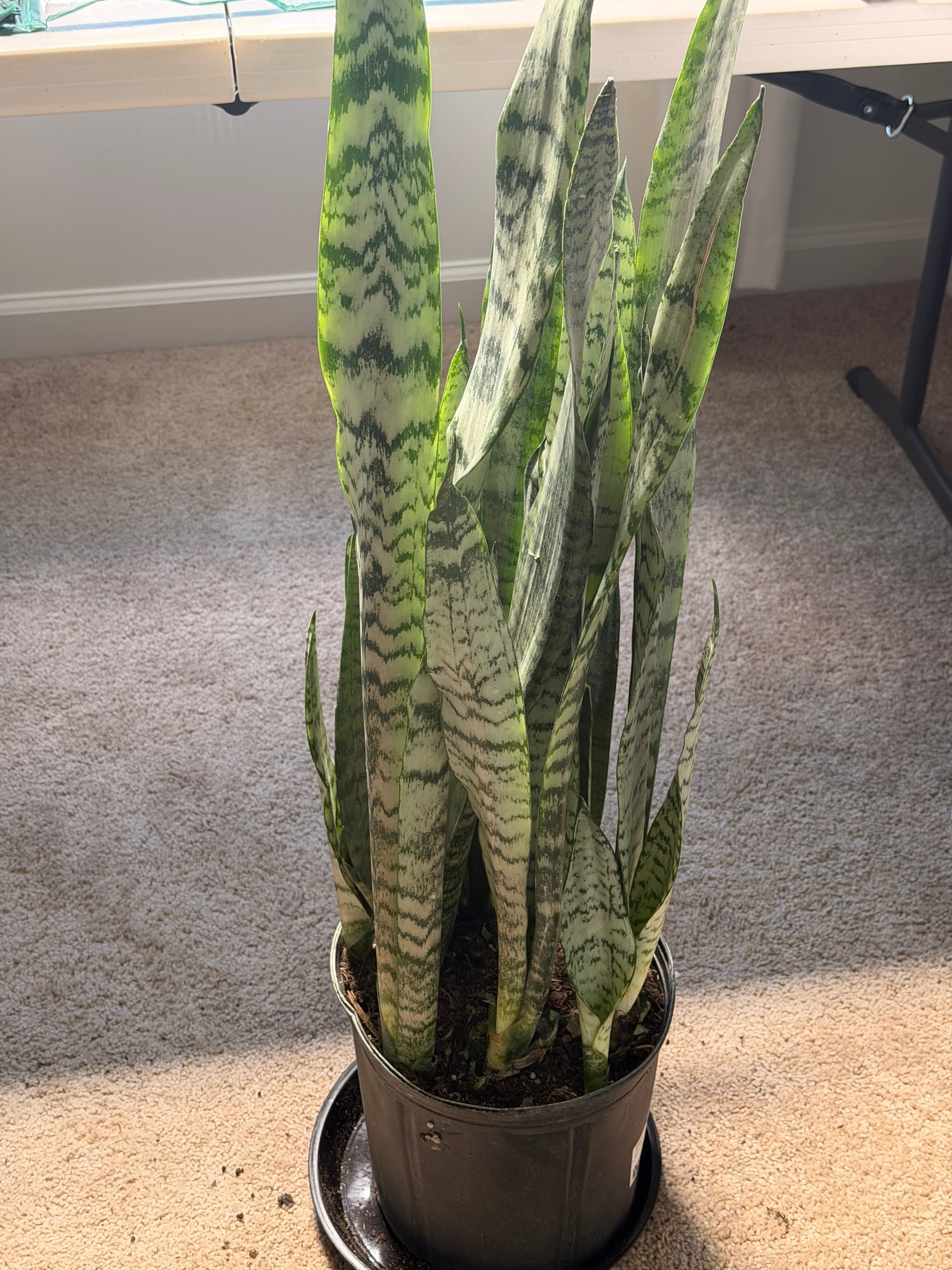
Unboxed
Cover photo · Type photo
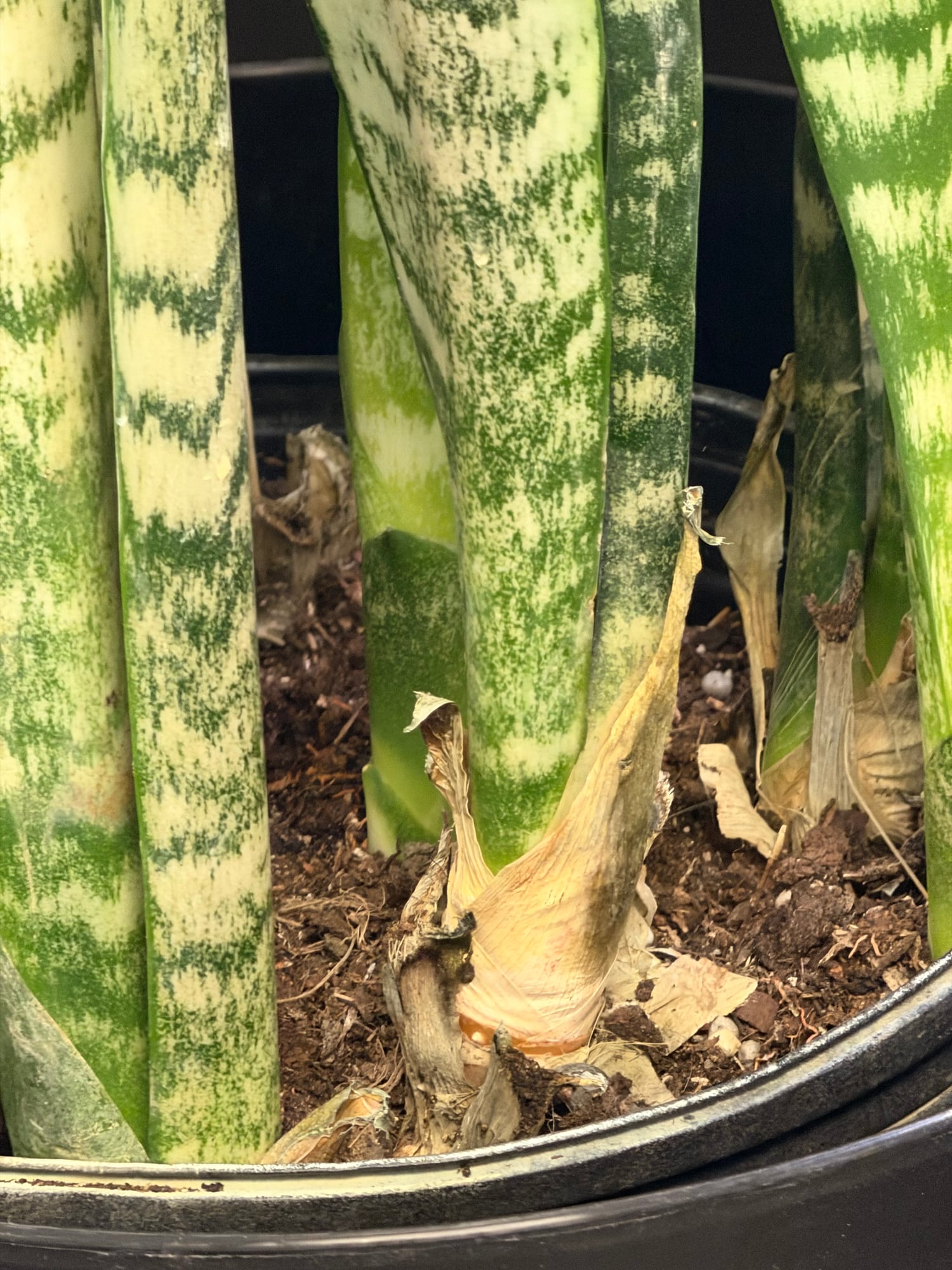
Potted snake plant leaves
Not cover · Not type
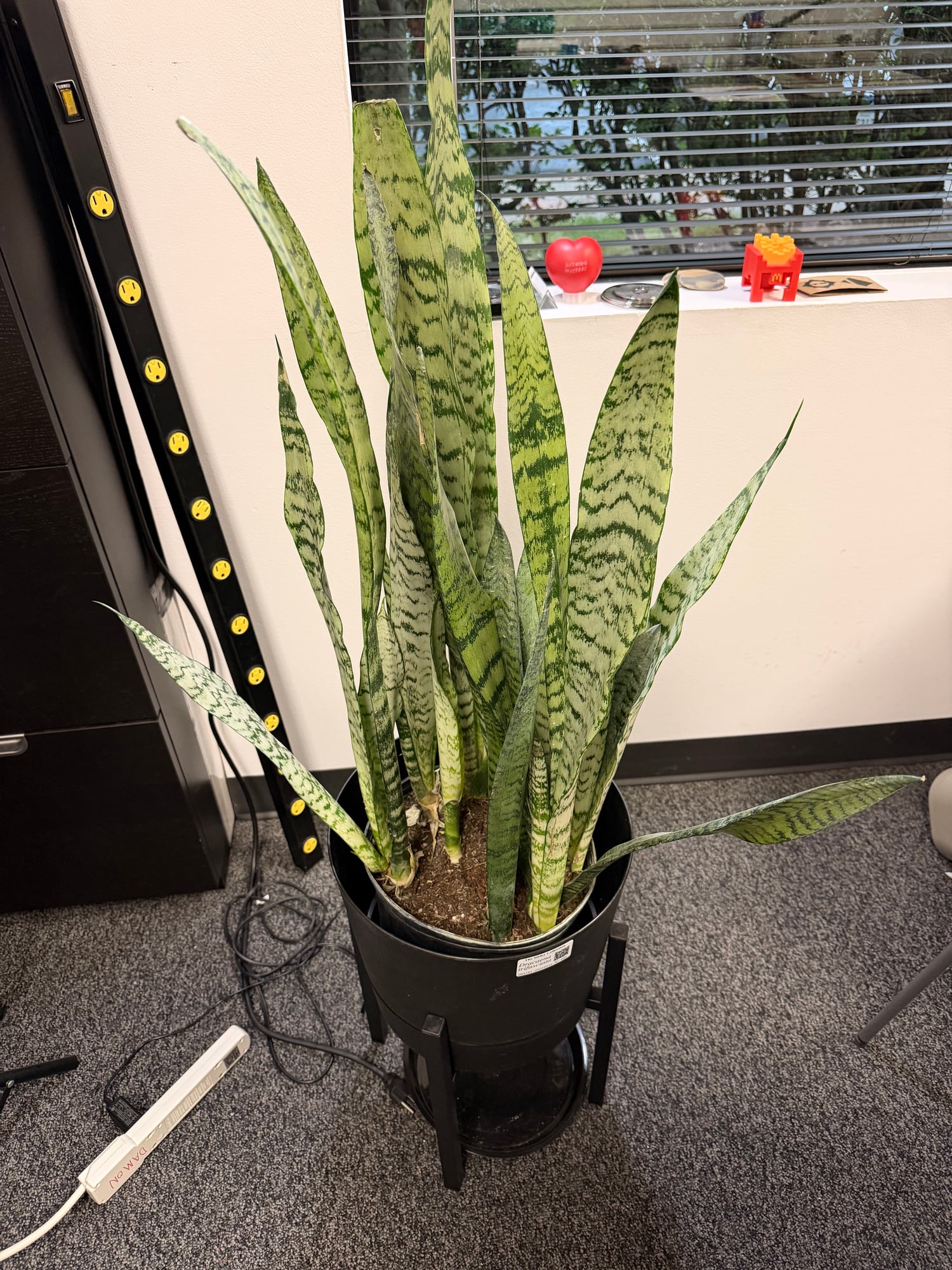
Tall potted snake plant indoors
Not cover · Not type
Plant Health Timeline
A deterministic record of care, observations, blooms, documentation, and lineage activity for this specimen.
Timeline status
Recently active
Health trend
Healthy
Age in collection
92 days
Last observation
1 day
Last watering
31 days
Last photo
28 days
Last bloom
No data
Bloom cycles
0
Propagations produced
0
Unresolved issues
0
Watch items
0
Longest quiet period
17 days
Life Story listOpenHide
May 2026
June 2026
July 2026
August 2026
Quarantine
Quarantine records are manual workflow records; moving a plant does not start or release quarantine by itself.
No active quarantine record.
Care
Last watering, open conditions, and recent care history.
Last watered
Jul 14, 2026
Next estimate
Aug 1, 2026
Open conditions
0
Recent care history
pest check · Aug 13, 2026
pest check · Jul 30, 2026
Green Thumb care note · Jul 17, 2026
Q: Should I do anything about the leaf "husks" at the base of each leaf cluster or just leave them?
Leave them unless they’re loose, mushy, or trapping moisture. Those papery husks are normal old leaf sheaths on snake plants. You can gently trim only fully dry, crispy bits for appearance, but don’t pull hard or cut into the stem.
watered · Jul 14, 2026
pest check · Jul 14, 2026
pest check · Jun 30, 2026
watered · Jun 24, 2026
pest check · Jun 16, 2026
Husbandry
Inherited from this plant definition.
Very drought tolerant; use fast-draining mix, avoid overwatering, and give brighter light for best growth.
Location compatibility
Not enough information
There is not enough structured data for a reliable comparison.
There is not enough structured temperature data to compare.
Plant: Unknown · Location: Unknown
There is not enough structured nighttime temperature data to compare.
Plant: Unknown · Location: Unknown
There is not enough structured humidity data to compare.
Plant: Unknown · Location: Unknown
There is not enough structured light measurement data to compare.
Plant: Unknown · Location: Unknown
There is not enough structured photoperiod data to compare.
Plant: Unknown · Location: Unknown
Qualitative light data is incomplete.
Plant: Unknown · Location: Unknown
Direct/indirect exposure data is incomplete.
Plant: Unknown · Location: Unknown
No structured airflow requirement is recorded.
Plant: Unknown · Location: Unknown
Environmental stability data is incomplete.
Plant: Unknown · Location: Unknown
Missing comparison data: Temperature, Nighttime temperature, Humidity, Light measurement, Photoperiod, Light intensity, Light exposure, Airflow, Stability.
Full husbandry guideOpenHide
Full husbandry guide
Inherited from plant definition
Quick summary
- Water
- Water sparingly
- Light
- Low light
- Toxicity
- Toxic if ingested
- Care notes
- Very drought tolerant; use fast-draining mix, avoid overwatering, and give brighter light for best growth.
Watering
- Cadence
- Every 2-6 weeks indoors, only after the mix dries completely.
- Moisture level
- Soil should dry almost or fully between waterings.
- Drought tolerance
- High; stores water in leaves and rhizomes.
- Wet/dry cycle notes
- Err on the dry side; empty saucers and avoid frequent small drinks.
- Seasonal adjustments
- Water less in winter and in cool, low-light conditions; slightly more in warm bright growth periods.
Light
- Intensity
- Low to bright indirect light; best in medium to bright indirect light.
- Duration
- About 6-12 hours daily; some gentle morning sun is usually fine.
Temperature and hardiness
- USDA zone
- USDA 10-12 outdoors; commonly grown indoors elsewhere.
- Cold tolerance
- Best above 10 C; brief drops near 5 C may damage foliage.
- Heat tolerance
- Handles warm indoor conditions well if not waterlogged.
- Frost sensitivity
- High; frost can severely injure or kill leaves and rhizomes.
- Overwinter instructions
- Keep indoors in bright light, reduce watering, and protect from cold drafts.
Humidity
- Range
- Average indoor humidity; roughly 30-60%.
- Dry air tolerance
- High; tolerates dry indoor air well.
- Misting notes
- Misting is unnecessary and can encourage leaf spotting or rot if foliage stays wet.
Soil and medium
- Preferred medium
- Very fast-draining cactus/succulent mix with added perlite, pumice, or coarse sand.
- pH preference
- Slightly acidic to neutral, about pH 6.0-7.5.
- Drainage needs
- Excellent drainage required.
- Growth substrate habit
- Rhizomatous succulent; roots prefer airy, not soggy, media.
- Substrate recipe notes
- Use a gritty mix; avoid heavy peat-rich potting soil unless heavily amended.
Fertilization
- Type
- Balanced houseplant or cactus fertilizer.
- Strength
- Quarter to half strength.
- Frequency
- Every 4-8 weeks during active growth only.
- Seasonal schedule
- Feed in spring and summer; skip or greatly reduce in fall and winter.
- Micronutrient notes
- Normal micronutrient content is adequate; avoid excess salts.
Repotting
- Interval
- Every 2-4 years or when crowded.
- Pot type
- Pot with drainage holes; heavy pot helpful for tall plants.
- Root sensitivity
- Moderate; roots and rhizomes bruise easily, so handle gently.
- Dormancy consideration
- Repot in active growth when possible; let any root damage dry before watering.
- Division guidance
- Divide rhizomes into sections with roots and shoots; allow cuts to callus briefly.
Propagation
- Preferred methods
- Rhizome division, leaf cuttings, and tissue culture.
- Difficulty
- Easy by division; moderate by leaf cuttings.
- Expected success
- High for division; variable for leaf cuttings, especially variegated forms.
- Optimal timing
- Late spring through summer.
- Rooting hormone notes
- Optional for leaf cuttings; not essential for division.
- Tissue culture notes
- Used commercially; useful for clean mass production of named selections.
Pests and disease
- Common pests
- Mealybugs, spider mites, scale, and fungus gnats in overly wet media.
- Common diseases
- Root rot, soft rot, and leaf spot from excess moisture or poor airflow.
- Treatment notes
- Remove pests manually or with horticultural soap; improve drainage and reduce watering for rot.
- Susceptibility level
- Low overall, but high risk from overwatering.
- Preventative practices
- Use a dry-down watering cycle, sterile tools, airflow, and well-drained pots.
Toxicity
- Pets
- Cautiously considered toxic to cats and dogs if chewed or eaten.
- Humans
- Usually mildly toxic if ingested; may cause stomach upset.
- Sap irritant
- Sap may irritate sensitive skin or eyes in some people.
- Edible?
- Not edible; do not ingest.
Dormancy and blooms
- Dormancy behavior
- Growth slows in cool, low-light periods rather than true dormancy.
- Typical bloom season
- Usually late spring to summer indoors, sporadically.
- Bloom duration
- Short; flowers last days to a few weeks.
- Fragrance
- Often lightly fragrant, especially at night.
- Rebloom tendency
- Uncommon indoors; mature plants may rebloom irregularly.
- Bloom triggers
- Strong light, root maturity, slight root restriction, and seasonal growth cycles.
- Pollinator notes
- Flowers may attract moths or other small insects when grown outdoors.
Growth habit
- Growth habit
- Evergreen clumping succulent with upright sword-like leaves and spreading rhizomes.
Conservation and collection status
- Rarity
- Common in cultivation.
- Conservation status
- Not generally regarded as threatened; exact status varies by source and taxonomy.
- Reference links
- https://powo.science.kew.org/results?q=Dracaena%20trifasciata; https://www.gbif.org/species/11041822; https://www.inaturalist.org/observations?taxon_id=67710
- Protected species notes
- No special protection is typically noted for common cultivated stock, but verify local rules for wild collection.
- Collection restrictions
- Avoid collecting from the wild without permission; follow phytosanitary and import rules for plant material.
- Import/export concerns
- May be subject to nursery inspection, soil restrictions, and phytosanitary certificates across borders.
- Invasiveness
- Can naturalize in warm frost-free regions; dispose of garden waste responsibly.
- Native range notes
- Native to tropical West Africa; widely cultivated and often misapplied under the older Sansevieria name.
Sport / mutation
Status: NONE
No sport observations yet.
Parents
No parent propagation recorded.
Children
No child propagations yet.
Add note
May 16, 2026, 1:36 PM EDT
On sale
Reminders
Send yourself plant check-in emails tied to this specimen.
Sign in to schedule reminders.
No reminders for this plant yet.
Bloom tracker
Open a bloom when it starts, mark peak later, then close it when finished. Photos can be added to the bloom event at any stage.
No bloom events recorded yet.